Подбор компьютерной периферии in 2024: what's changed and what works
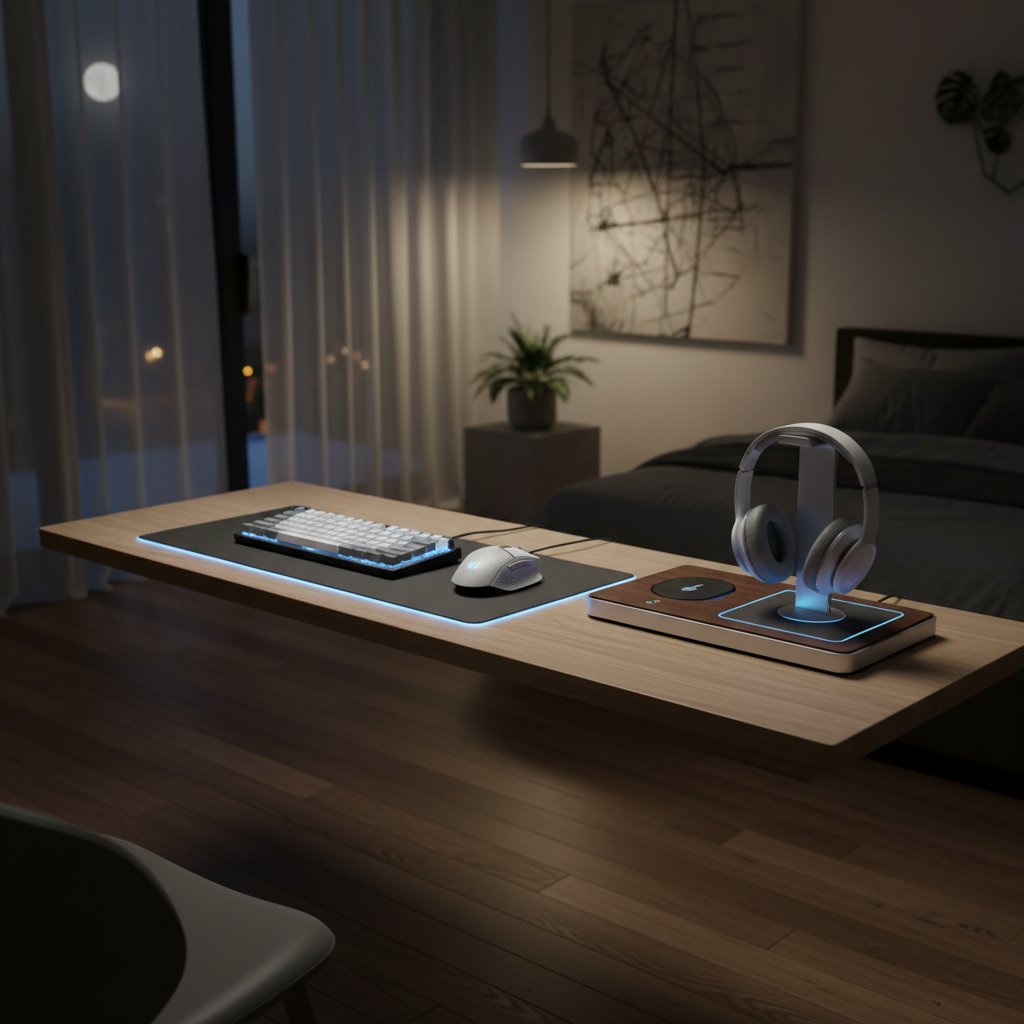
The peripheral market has gone absolutely bonkers over the past year. Between the explosion of AI-powered features, the shift toward wireless everything, and manufacturers finally figuring out that not everyone wants RGB lighting that could guide aircraft, 2024 has brought some genuinely useful changes to how we pick mice, keyboards, and monitors.
Here's what actually matters now when you're building or upgrading your setup.
What's Actually Different in 2024
1. Wireless Finally Doesn't Suck (Even for Gaming)
Remember when wireless mice meant lag and dead batteries mid-game? Yeah, those days are toast. Current wireless tech from companies like Logitech, Razer, and even budget brands now delivers 1000Hz polling rates with sub-1ms latency. The Logitech G Pro X Superlight 2, for instance, clocks in at 0.5ms response time—faster than some wired competitors from just two years ago.
Battery life has jumped too. We're talking 80-100 hours of continuous use on a single charge. The Razer Viper V3 Pro can run for three months with moderate daily gaming. That's a complete flip from the "charge every other day" nightmare of 2021.
The real kicker? Prices have dropped. You could snag a tournament-grade wireless mouse for $80-120 in early 2024, whereas similar specs would've cost you $180+ in 2022. The technology trickled down fast.
2. 8KHz Polling Became Mainstream (But You Probably Don't Need It)
Marketing teams went wild with 8000Hz polling rates this year. Razer pushed it hard, Corsair followed, and suddenly every gaming peripheral needed to scream about 8K responsiveness. Here's the truth: unless you're competing at the esports level where microseconds matter, 1000Hz is perfectly fine.
The difference between 1ms and 0.125ms response time is imperceptible to 99% of users. What's more, 8KHz polling actually tanks your CPU usage—we're talking 2-5% constant load on some systems. That's processing power your games could use instead.
Save your money. The sweet spot remains 1000Hz wireless or wired mice, which now cost $40-70 from reliable brands like Glorious, Pulsar, and Lamzu.
3. Mechanical Keyboards Got Quieter (Without Feeling Mushy)
The office revolt against clacky keyboards finally forced manufacturers to innovate. Silent mechanical switches in 2024 actually feel good. Gateron's Silent Ink switches and Cherry's MX Silent Red V2 maintain that satisfying tactile response while producing 30-40% less noise than their 2022 counterparts.
Foam-modded keyboards became standard rather than enthusiast-only. Even pre-built boards under $100 now ship with case foam, PCB foam, and sound-dampening materials that used to require DIY modifications. The Keychron V series and Royal Kludge boards prove you don't need to spend $200 to get a keyboard that won't annoy everyone in your household.
Hot-swappable sockets also went mainstream. You can now swap switches without soldering on keyboards starting at $60. This matters because you can try different switch types without buying entirely new boards—a game-changer for people still figuring out their preferences.
4. Monitor Refresh Rates Hit Absurd Heights (Diminishing Returns Alert)
360Hz monitors were the flagship spec in 2023. Now we've got 480Hz and even 540Hz displays hitting the market. The Asus ROG Swift PG248QP runs at 540Hz, which sounds incredible until you realize that going from 360Hz to 540Hz provides maybe 1-2% competitive advantage at best.
The smarter play? 240Hz OLED monitors dropped to $600-800 in 2024. You get perfect blacks, instant response times, and refresh rates that actually make a visible difference from standard 144Hz panels. The LG UltraGear 27GR95QE and Samsung Odyssey OLED G8 deliver experiences that blow away higher-refresh-rate LCD panels.
For productivity and mixed-use, 4K 144Hz monitors became the sweet spot. Prices fell to $400-500 for decent models, making them accessible for people who want sharp text during work hours and smooth gaming at night.
5. AI Features Started Appearing (Mostly Gimmicks, One Exception)
Every peripheral manufacturer slapped "AI" on their packaging this year. Most of it is nonsense—your mouse doesn't need machine learning to track movement. But one feature actually delivers: AI-powered noise cancellation in headsets.
HyperX's Solocast 2 and SteelSeries Arctis Nova Pro use AI filtering that legitimately eliminates keyboard clatter, background conversations, and AC hum without making your voice sound robotic. It's not perfect, but it beats the "underwater voice" effect from previous noise-gate technologies.
Skip the AI DPI adjustment, AI lighting, and AI sensitivity curves. Those are solutions looking for problems.
6. Budget Peripherals Closed the Quality Gap
This might be the biggest shift of 2024. Brands like Redragon, Ajazz, and Akko proved you don't need premium pricing for premium performance. The Redragon M913 wireless mouse costs $35 and performs within 5% of mice triple its price in blind testing.
The performance ceiling hasn't moved much—flagship peripherals from 2022 still compete with 2024 models. But the floor rose dramatically. You can build a complete setup (mouse, keyboard, headset, mousepad) for under $150 that would've required $400+ two years ago.
Chinese manufacturers figured out Western distribution, cutting out middlemen and passing savings to consumers. Quality control improved too—return rates dropped from 8-12% to 2-4% for budget brands according to retailer data.
The Bottom Line
Stop chasing specs you'll never use. The peripheral market in 2024 rewards smart buyers who ignore marketing hype. Wireless tech matured, prices dropped across the board, and the gap between budget and premium narrowed to the point where diminishing returns hit hard above $100 per peripheral.
Buy based on comfort, build quality, and features you'll actually use daily. Your hands will thank you more than your leaderboard ranking will.